

Menu

You're Invited to Gulfood 2026
Find us at Za'abeel Hall 2, Stand Z2-C3
Understanding Pallets, Trays, and Container Loading: The Logistics of Profit

Author
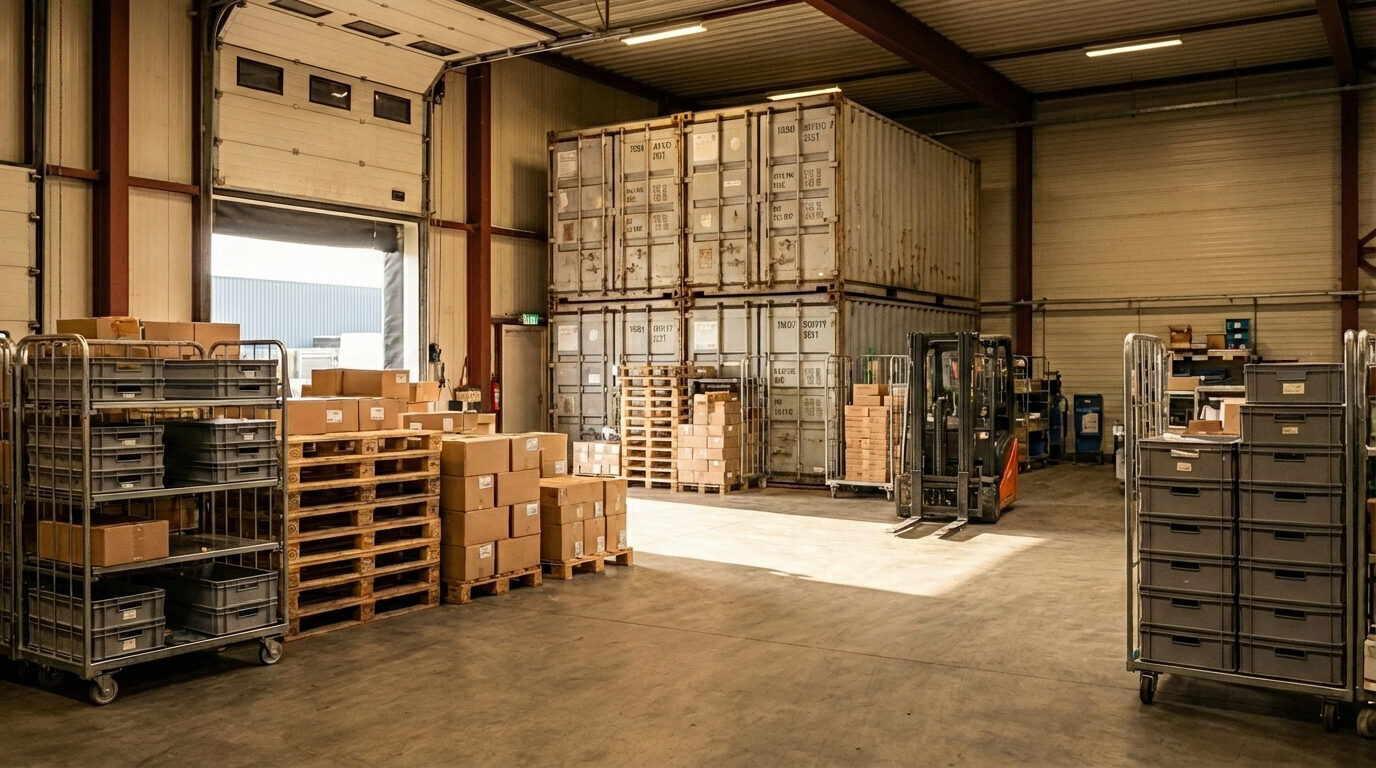
The Geometry of Efficiency: Maximizing Every Square Inch
In the high-volume world of international beverage trade, margins are often won or lost in the "dead space" of a shipping container. For an importer, paying $3,000 for sea freight remains a fixed cost whether the container holds 50,000 cans or 70,000 cans. The "Landed Cost" (the final cost of the can when it arrives at your warehouse) is mathematically determined by how efficiently we pack that steel box.
At Atlasimex, we view logistics as a form of "industrial Tetris." We help our partners in 21+ countries navigate the trade-offs between speed of handling and volume efficiency. Here is the breakdown of the essential units of trade.
1. The Base Unit: Trays vs. Packs
Everything starts with the "Sales Unit."
- The 24-Can Tray: This is the global industry standard for wholesale. It is a cardboard base shrink-wrapped in plastic. It is robust, stackable, and protects the cans during ocean transit.
- The 6-Pack (Cluster): A consumer convenience format. For markets requiring 6-packs, we produce them within the 24-tray structure (i.e., four 6-packs inside one tray). This ensures the structural integrity of the pallet remains high while offering a "retail-ready" format immediately upon opening.
2. The Loading Method: Palletized vs. Loose
This is the single most important decision for an importer.
- Option A: Euro Pallets (120 x 80 cm):
- The Pros: Speed. A forklift can unload a palletized container in 30 minutes. It minimizes damage risk and is required by many modern European warehouses.
- The Cons: Space Loss. The wooden pallet takes up vertical space, and the inability to stack to the absolute roof means you lose approximately 10-15% of the container's volume capacity.
- Option B: Loose Loading (Hand-Balling):
- The Pros: Maximum Volume. Our team hand-stacks the trays floor-to-ceiling, wall-to-wall. This allows us to fit thousands of extra cans into a 20ft container, significantly lowering the shipping cost per unit.
- The Cons: Labor. You will need a manual workforce to unload the container tray-by-tray at the destination.
3. The Atlasimex Optimization
We don't leave this to chance. Our logistics team calculates the "Stacking Factor."
- We analyze your warehouse capabilities (do you have a forklift ramp?) and your local labor costs.
- In markets where labor is affordable (e.g., parts of Africa or Asia), we often recommend Loose Loading to maximize product volume.
- In markets with high labor costs (e.g., Western Europe), Palletized is often the cheaper overall option despite the lower volume, due to the savings in warehouse time.
Efficiency is Profit
The cheapest supplier isn't always the one with the lowest factory price; it's the one who can get the product to your door most efficiently. By partnering with Atlasimex, you gain access to a logistics team that treats your freight budget as if it were our own, ensuring you never pay to ship empty air.
Tags
- Supply Chain
- Logistics Optimization
- Export Guide
- Warehouse Management
Share
Join our newsletter
Email address: Subscribe