

Menu

You're Invited to Gulfood 2026
Find us at Za'abeel Hall 2, Stand Z2-C3
Export-Ready Packaging: What Distributors Need to Know

Author
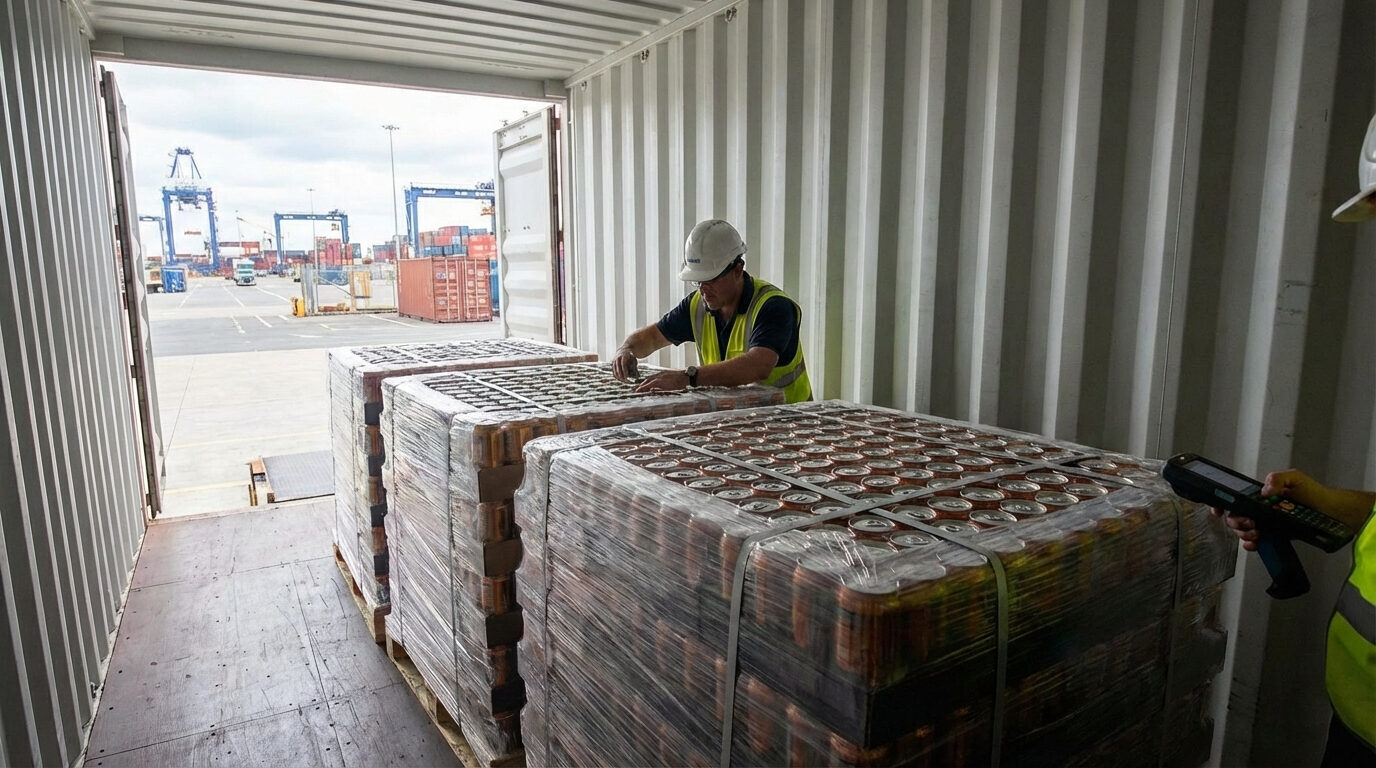
The 5,000-Mile Shield: Why Packaging is Your Insurance Policy
The journey of an export beverage is brutal. Before a can reaches the consumer's hand, it travels thousands of kilometers by truck, endures the rolling motion of a ship at sea for weeks, faces extreme temperature fluctuations in a steel container, and is often handled by forklifts in rugged warehouse environments.
If the packaging fails at any point in this chain, the distributor loses money. Dented cans are unsellable. Leaking trays can ruin an entire pallet. At Atlasimex, we believe that packaging is not just a wrapper; it is structural engineering. Here is what defines "Export-Ready" packaging.
1. The Tray: Structural Integrity
The cardboard tray is the skeleton of the shipment.
- The Mistake: Many budget manufacturers use single-wall, low-GSM (grams per square meter) cardboard to save cents. These trays collapse under the weight of stacking, leading to "crushed" pallets.
- The Standard: We utilize High-GSM, Double-Wall Corrugated Trays. These are designed to withstand the vertical compression of stacking up to 10 layers high. They don't just hold the cans; they armor them against vibration and impact.
2. The Wrap: Tension and Thickness
The plastic shrink wrap does more than hold the cans together; it seals out moisture and dust.
- The "Micron" Matter: We use industrial-grade shrink film with high micron thickness. When heat-shrunk in our tunnel, it creates a rigid, tension-tight brick.
- Stability: This tightness prevents the cans from rubbing against each other (which ruins the label paint) and stops the pack from shifting during rough sea transits. A loose pack is a damaged pack.
3. Traceability: Data on the Box
Export-ready packaging must speak the language of logistics.
- Coding: Every tray we produce carries clear, inkjet-printed data: Production Date (PD), Expiry Date (ED), and Batch Number.
- Why It Matters: This allows for instant stock rotation (First-In, First-Out) in your warehouse and ensures full traceability in the event of a quality audit. Without clear external coding, warehouse staff have to rip open packs just to check dates—a massive inefficiency.
Protecting Your Profit
We do not cut corners on cardboard or plastic because we know the cost of a "bad arrival." By investing in robust, export-grade materials, Atlasimex ensures that the product you receive looks exactly as pristine as the product that left our factory line. Your profit margin depends on sellable inventory, and our packaging protects it.
Tags
- Packaging Standards
- Logistics Safety
- Supply Chain
- Quality Control
Share
Join our newsletter
Email address: Subscribe