

Menu

You're Invited to Gulfood 2026
Find us at Za'abeel Hall 2, Stand Z2-C3
20ft vs 40ft Containers: Optimizing Beverage Logistics

Author
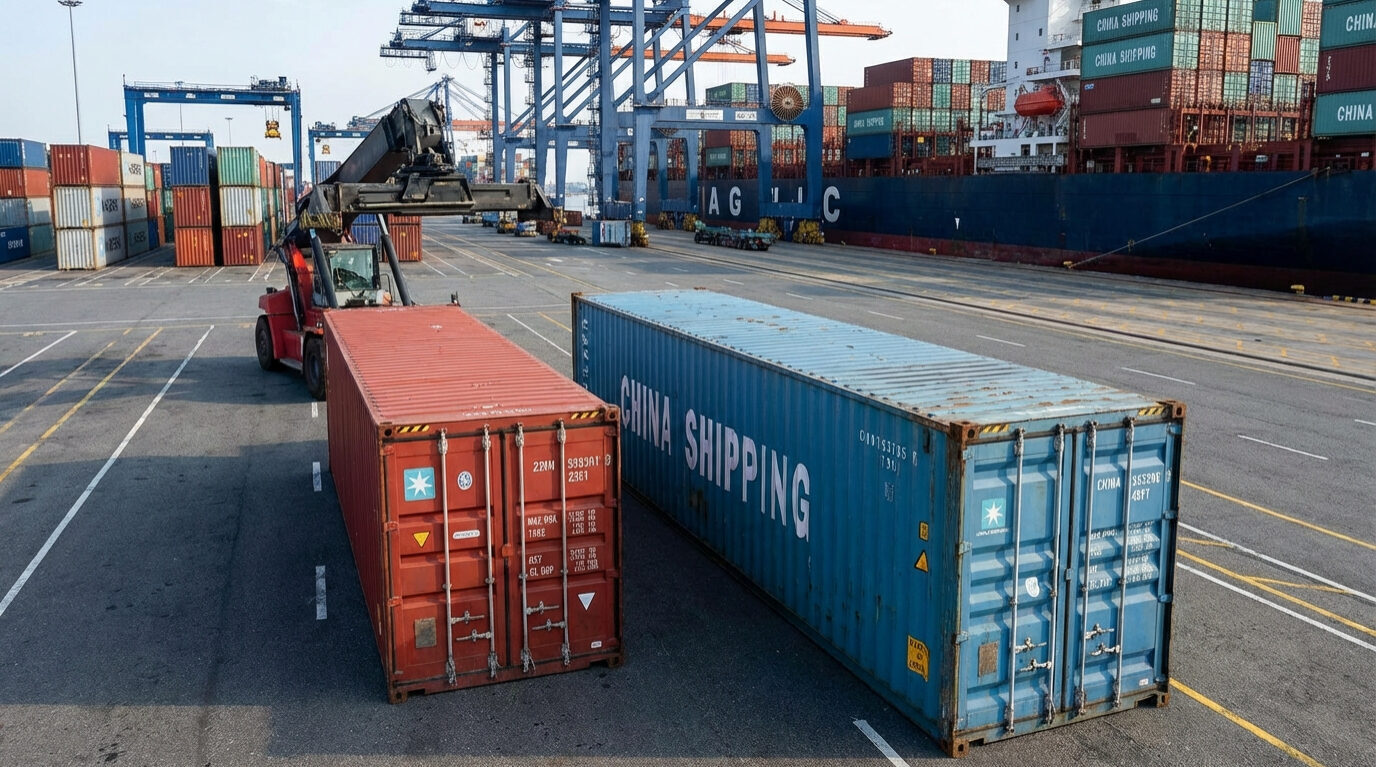
The Weight vs. Volume Trap: Mastering Beverage Freight
For new importers, the logic seems simple: "A 40ft container is twice as big as a 20ft container, so it must be cheaper to ship per unit." In many industries, this is true. In the beverage industry, however, this is often a costly mistake.
Liquid is dense and heavy. A standard 250ml energy drink weighs significantly more than clothing or electronics. Because international shipping is governed by strict road weight limits (typically 20-25 tons per container depending on the destination), a 40ft container will often hit its maximum weight limit long before it is full by volume.
At Atlasimex, we act as logistics architects for our partners in 21+ countries. Understanding the physics of the container is key to optimizing your "Landed Cost"—the final price of the product once it arrives at your warehouse.
1. The 20ft Heavy Container: The Beverage Standard
For finished beverages (liquid in cans or bottles), the 20ft container is the industry workhorse.
- The Physics: You can load a 20ft container almost to its roof with beverage trays and hit the ~24-ton weight limit perfectly. You are utilizing both the maximum weight and maximum volume efficiency.
- The Economics: Since ocean freight for a 20ft is lower than a 40ft, and you can't put much more weight in a 40ft anyway, the 20ft usually offers the best cost-per-can for heavy goods.
2. The 40ft Container: When Does It Make Sense?
A 40ft container is useful when the cargo is lighter or when specific pallet configurations are required by the receiver.
- Mixed Loads: If you are importing a mix of heavy energy drinks and lighter items (like empty packaging materials or point-of-sale displays), a 40ft allows you to "bulk out" the volume without exceeding the weight limit.
- Strict Pallet Requirements: Some large retail distribution centers refuse hand-stacked containers. They require single-layer pallets for rapid forklift unloading. In this case, the extra floor space of a 40ft is necessary to accommodate the footprint of the pallets, even if the container isn't full to the top.
3. Palletized vs. Loose-Loaded (Hand-Stuffed)
This is the single biggest lever for cost optimization.
- Palletized: We load the goods on Euro Pallets (120x80cm) or Standard Pallets.
- Pros: Fast unloading (30 mins) at your warehouse; safer transit.
- Cons: You lose ~10-15% of the container space to the wood and the gaps between pallets.
- Loose-Loaded (Hand-Stuffed): Our team stacks the trays directly onto the floor of the container, floor-to-ceiling.
- Pros: Maximum efficiency. We can fit thousands of extra cans, significantly lowering the shipping cost per unit.
- Cons: Requires manual labor to unload at the destination.
The Atlasimex Promise: Precision Loading
We don't guess; we calculate. Our logistics team provides detailed loading plans before you order. We optimize the layout of every pallet and tray to ensure that whether you choose PROMAX, NF Drinks, or your own Private Label, you are paying for beverage inventory, not empty air.
Tags
- Logistics Strategy
- Supply Chain Optimization
- Import/Export
- Cost Reduction
Share
Join our newsletter
Email address: Subscribe